


 Wheel of Life Save ↓
Wire Mandala
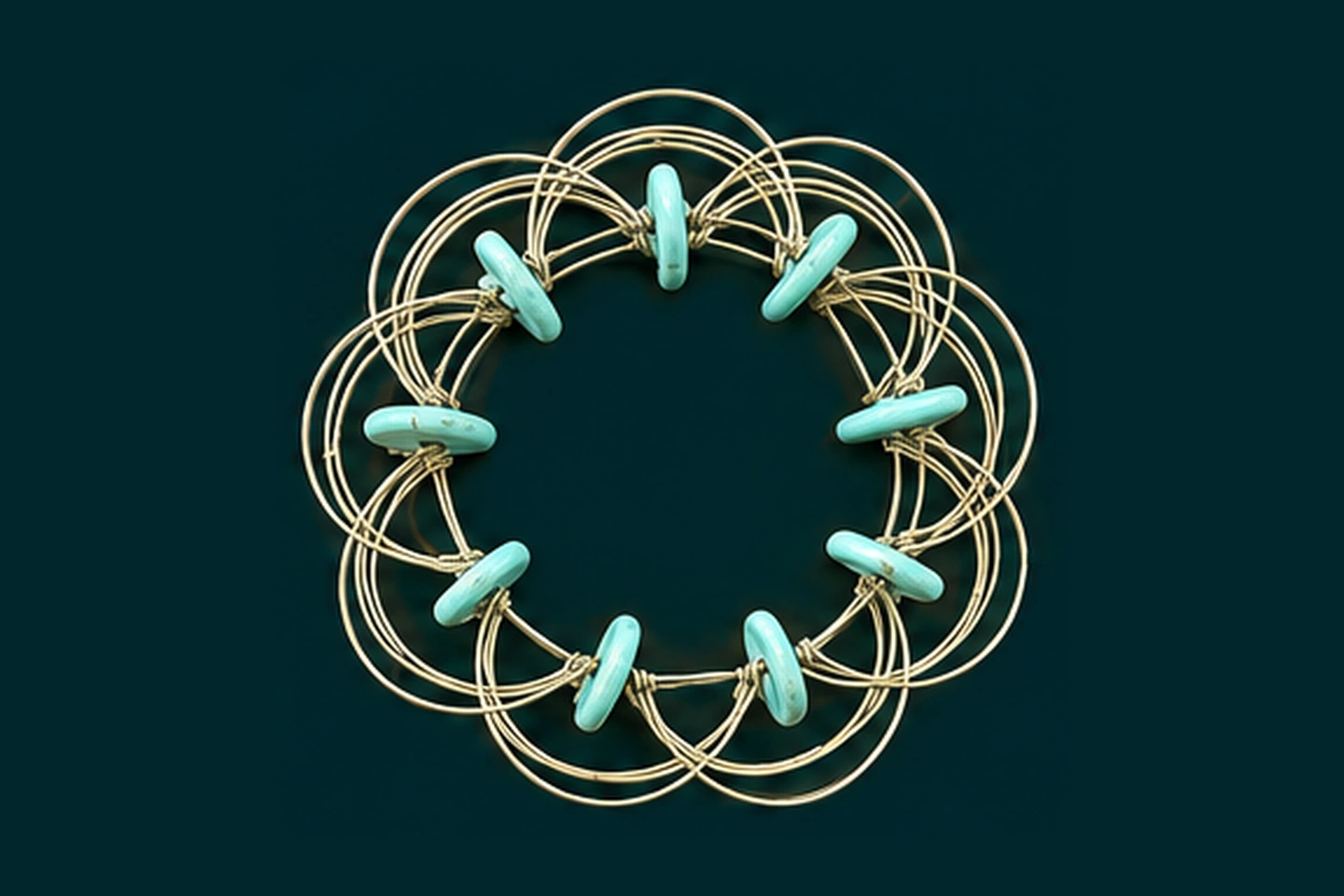
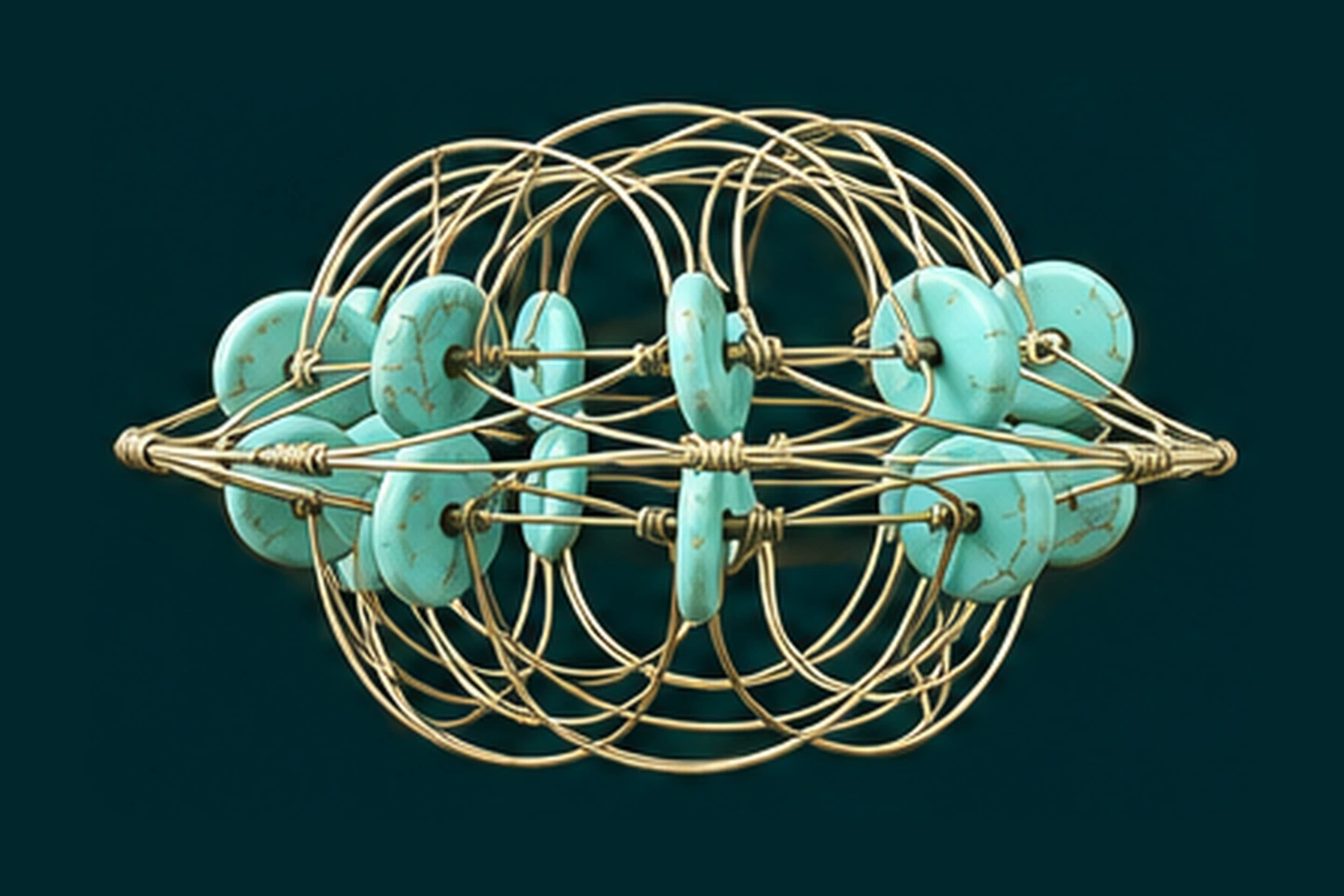
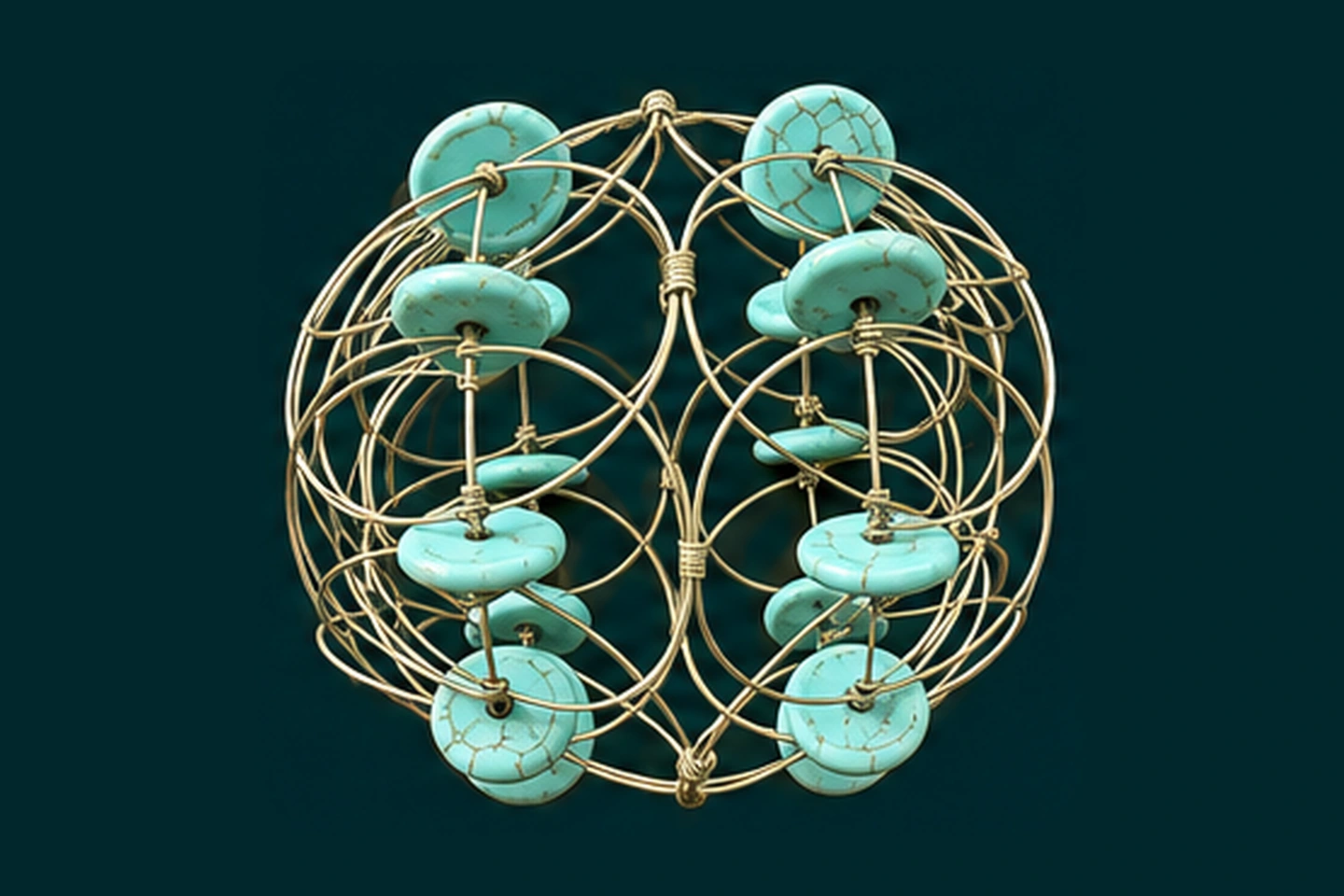
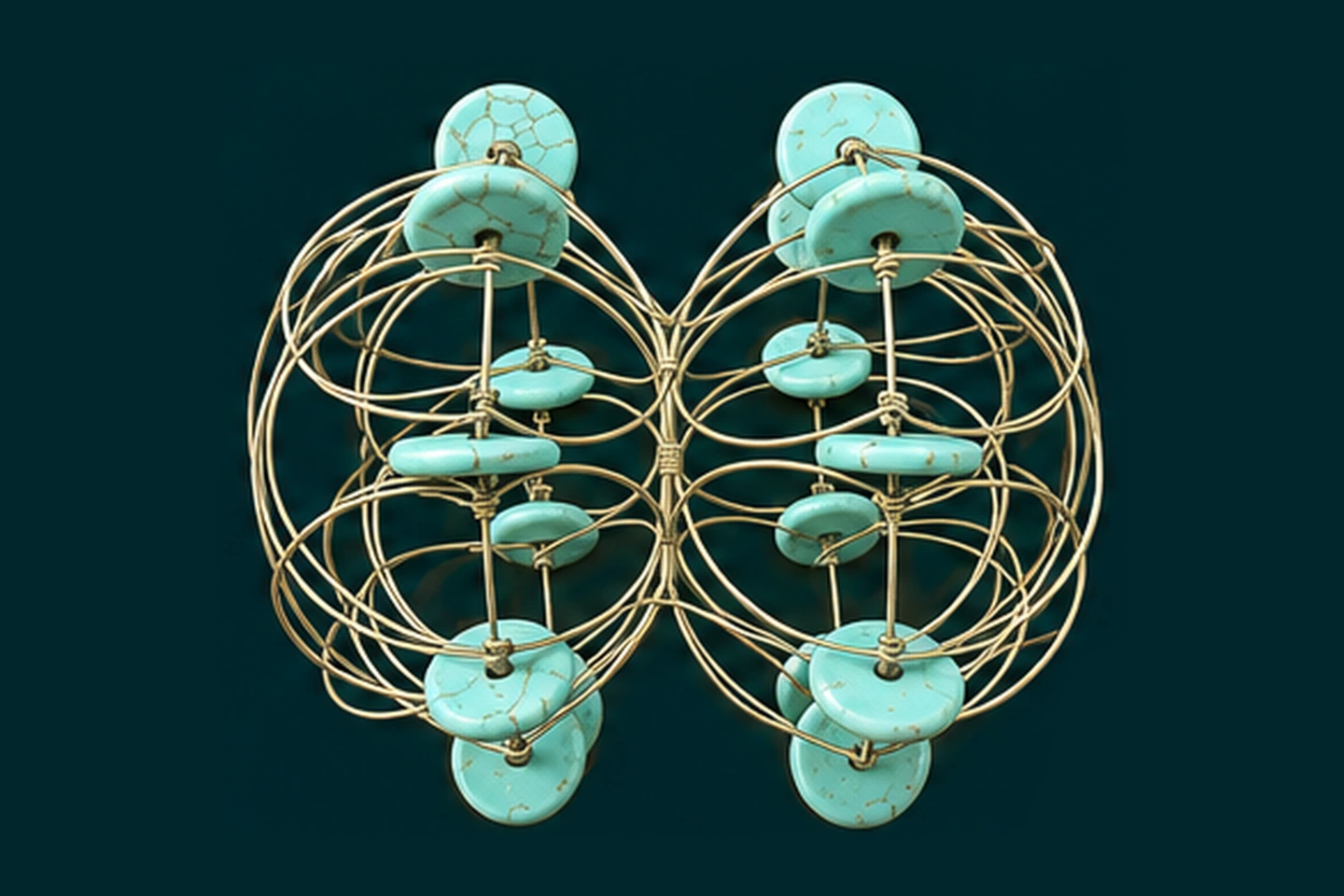
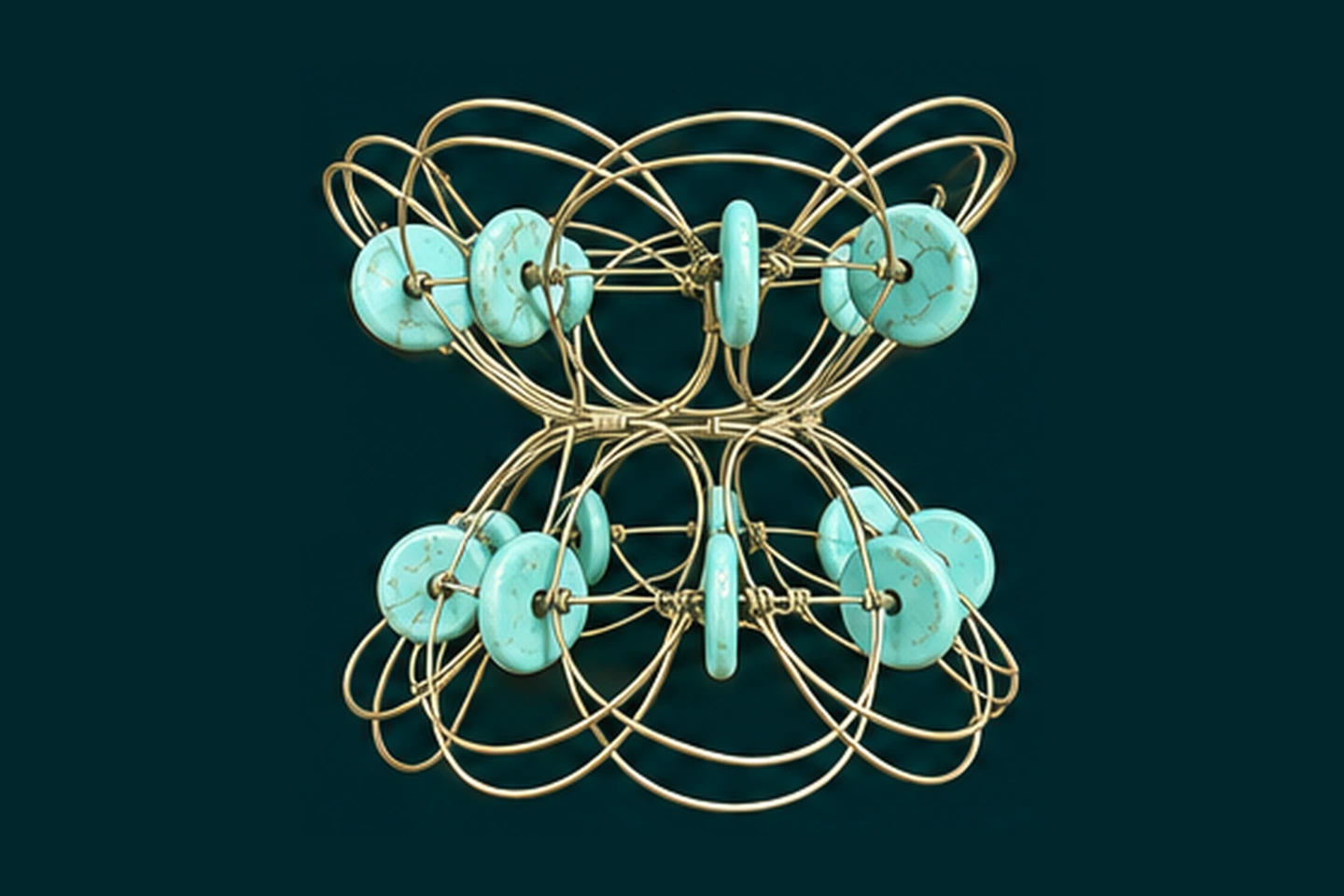
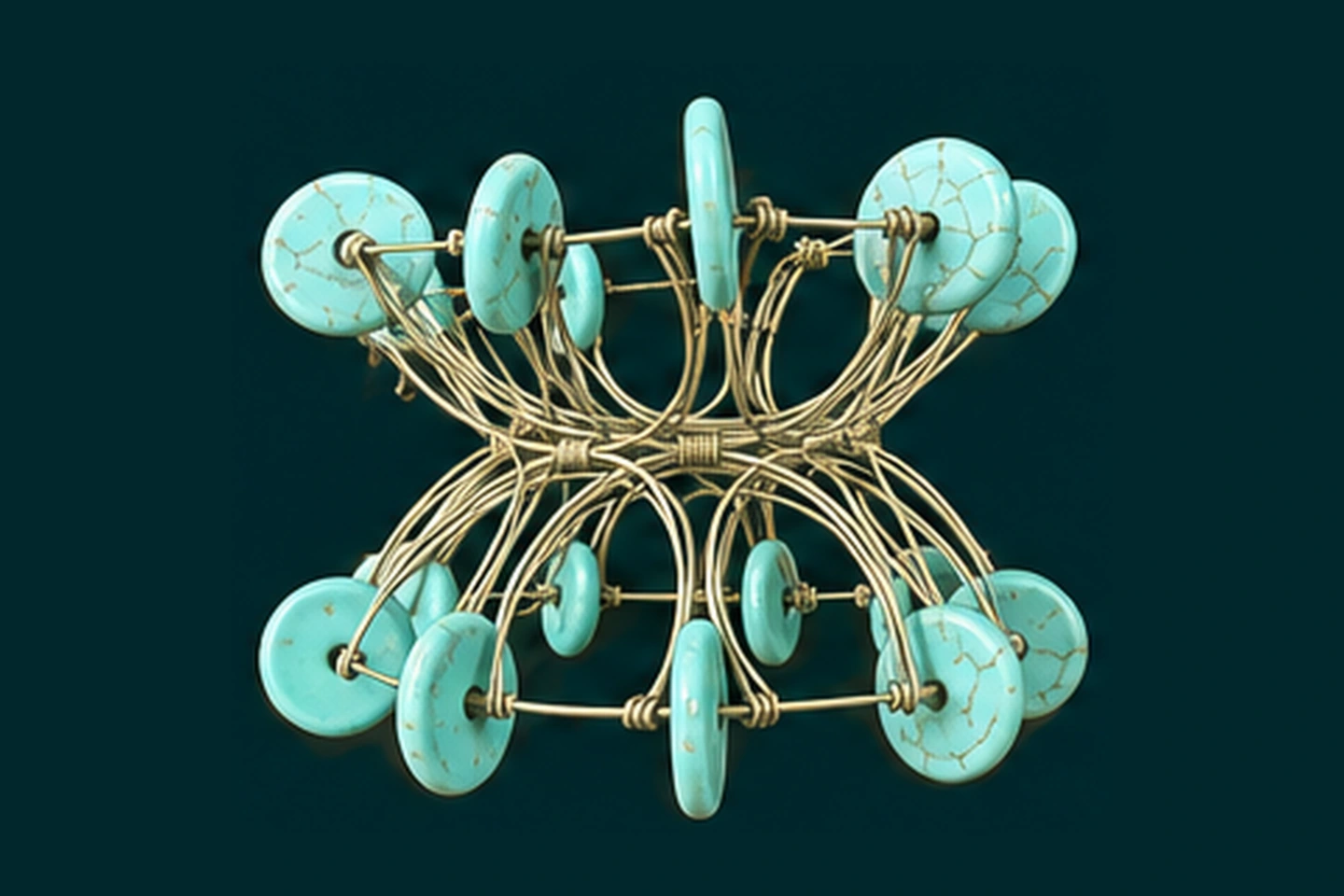
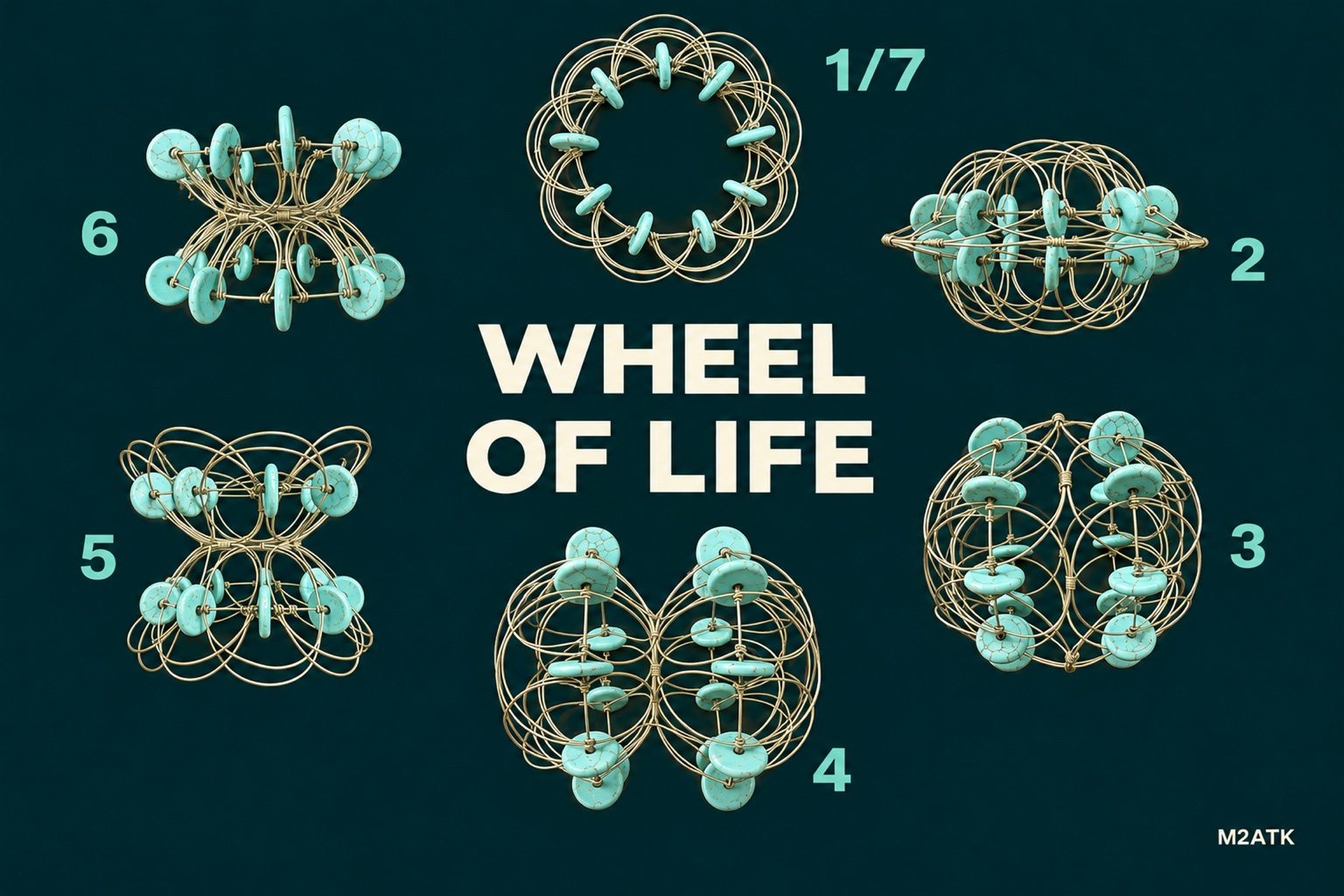
A flower, a sphere, an hourglass. Each form emerges from the same fine loops of wire. As the hands turn the piece, its turquoise discs trace the movement of the rings. What looks like a petal in one position becomes the edge of a globe in the next.
The origins of the folding wire mandala remain uncertain. Artisans in northeastern India were making metal lotuses with hinged petals by the twelfth century, though a direct link to the wire form has yet to be established. A more recent chapter survives in the account of Quebec artisan Chris Paul-Tatonetti, who learned the craft in southern France around 1990. It took him ten attempts to make a mandala that folded freely. Each curve had to be precise enough for the next one to move.
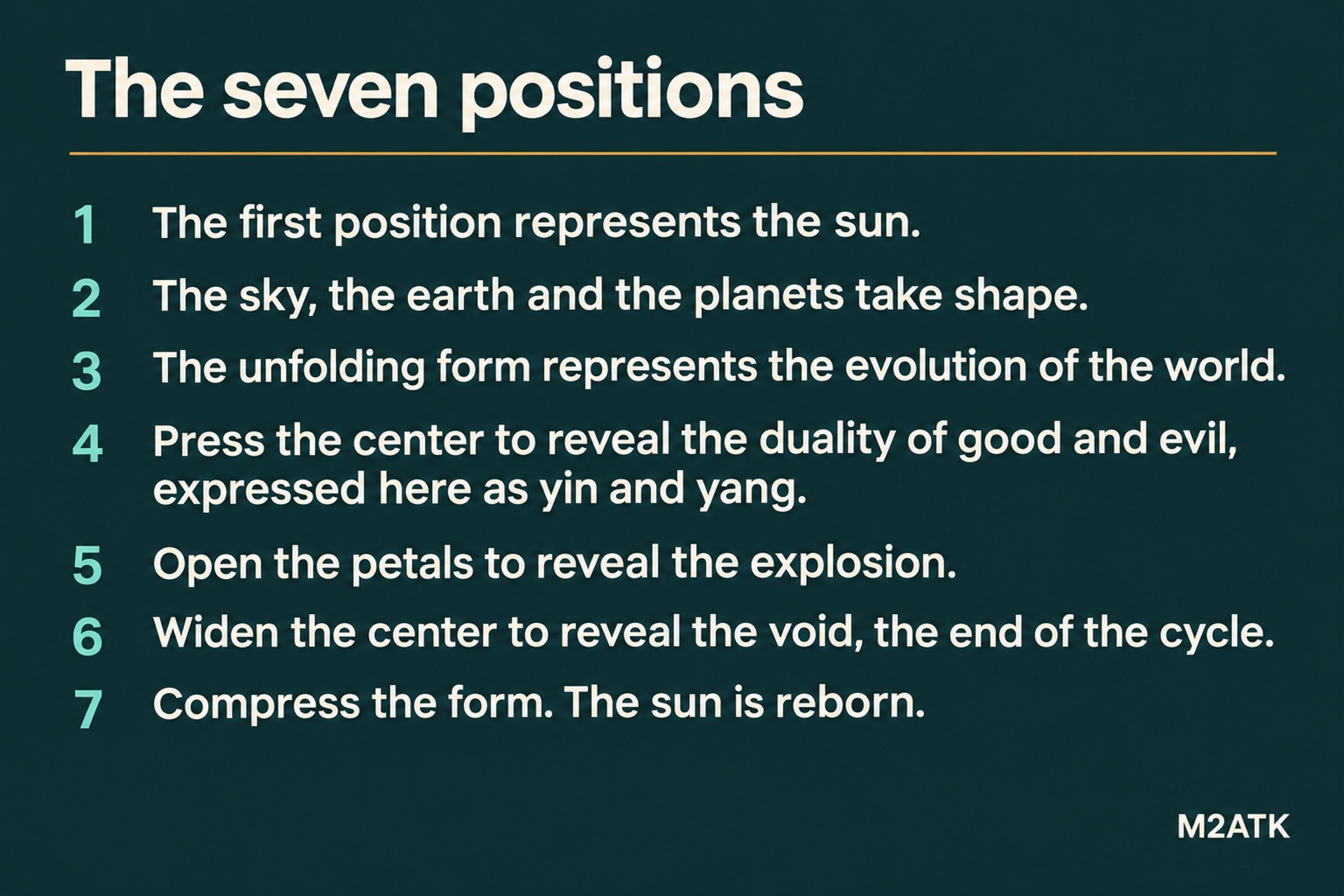
In Wheel of Life, seven positions tell a story of creation, expansion and return. The open ring represents the sun. As the center widens and the petals unfold, the piece takes on the shapes of an evolving world. The final gesture brings it back to its first form. The same circle now holds a different meaning: the sun, reborn.